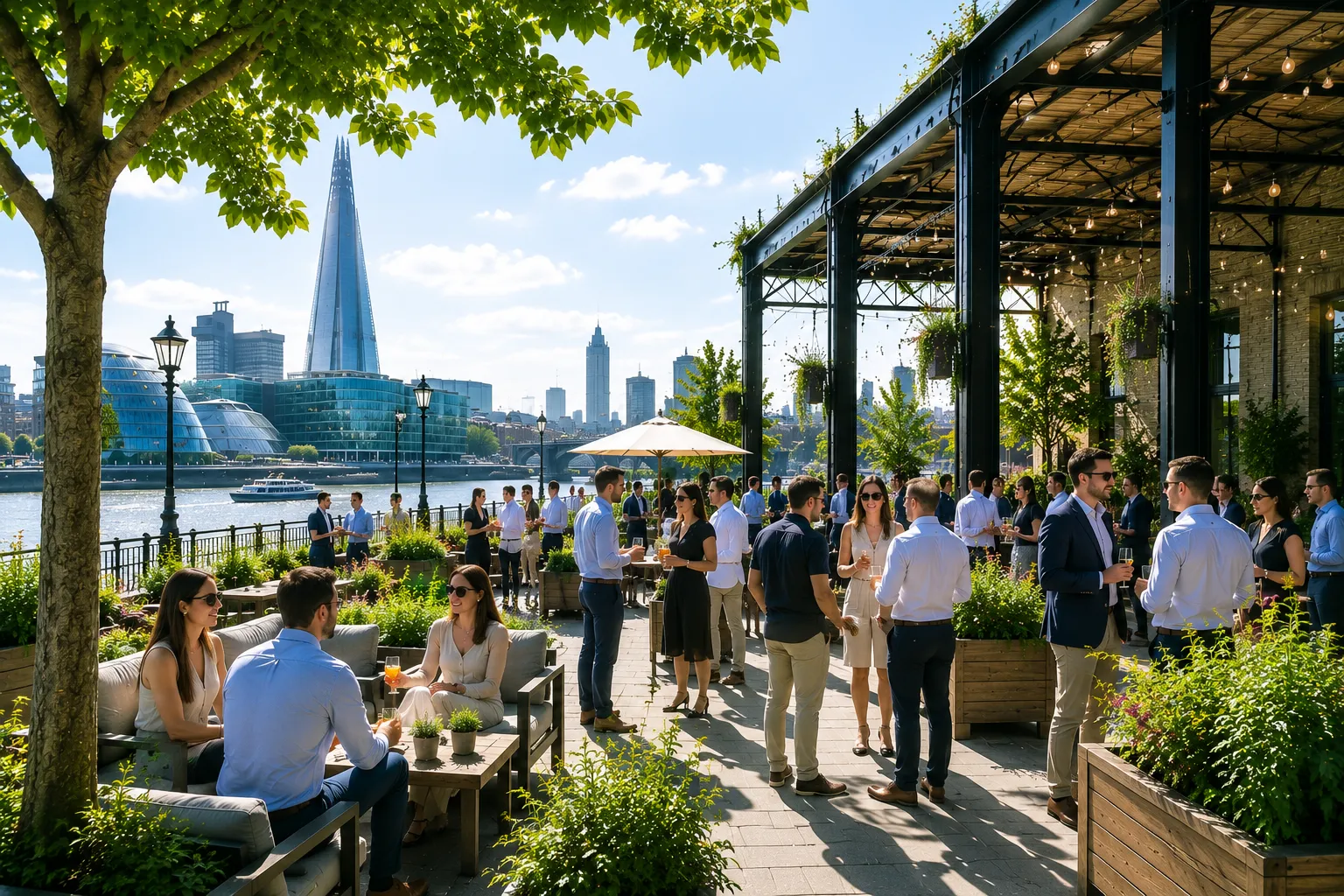

When Cities Become Experience Platforms
Every summer, cities begin to operate differently.
Longer evenings encourage people to stay outdoors, public spaces become extensions of cafés and workplaces, and neighbourhoods that feel quieter through the winter suddenly become destinations in their own right. Footfall shifts, dwell time increases, and people become more willing to explore rather than simply travel from one destination to another.
London provides a clear example of this transformation. During July, events such as Wimbledon, BST Hyde Park, and Pride in London don't simply attract visitors—they redistribute attention across the city, turning parks, streets, and neighbourhoods into temporary destinations where culture, commerce, and community intersect.
For brands, that seasonal shift creates an opportunity that digital channels alone cannot replicate. Summer doesn't simply bring more events; it changes how attention moves through a city, making physical spaces increasingly important as places where people discover, engage with, and remember brands.
Why Live Experiences Are Becoming a Competitive Advantage
Despite the rapid growth of AI and digital marketing, organisations continue to increase investment in live experiences. The reason is not that physical events reach more people, but that they create different kinds of outcomes. As digital channels become increasingly efficient at capturing attention, competitive advantage is shifting towards creating moments that people actively choose to attend rather than simply scroll past.
A digital campaign can generate impressions, clicks and conversions. A live experience creates conversations, relationships and trust. While those outcomes are harder to quantify, they often deliver longer-term value through stronger brand recall, word-of-mouth advocacy and deeper customer relationships that extend well beyond the event itself.
PwC's Global Entertainment & Media Outlook 2026–2030 projects continued growth in live entertainment despite ongoing advances in digital media, suggesting that organisations increasingly view physical experiences as complementary to digital engagement rather than an alternative. As audiences spend more time consuming digital content, the experiences that stand out are increasingly those that cannot be replicated on a screen.
Rather than replacing digital channels, the most effective brands are combining both. Digital platforms generate awareness and drive discovery, while physical experiences transform that interest into participation, community and lasting brand affinity. Increasingly, the value of a live event lies not only in what happens on the day, but in the relationships and content it continues to generate afterwards.
Why Space Has Become a Brand Asset
For a long time, venue selection was treated as a logistical decision. Once the concept, audience and programme had been defined, the remaining task was simply to find a suitable space. Increasingly, however, the choice of place is influencing the concept itself, with brands selecting environments that reinforce the experience they want people to create from the outset.
This reflects a broader shift in branding. Today, people experience brands across multiple touchpoints rather than through campaigns alone, and physical environments have become one of the most influential touchpoints. A rooftop overlooking the city, an industrial warehouse, a neighbourhood gallery or a converted railway arch each communicates something different about a brand's identity, values and audience before a single presentation begins.
Gensler's Design Forecast 2026 argues that experience has become the true measure of real estate value, with the most successful places attracting people through the stories they tell rather than their scale alone. As brands increasingly compete through experiences rather than products alone, the environments in which those experiences take place have become strategic assets. Choosing a space is no longer simply about finding a suitable venue—it is about selecting a setting that reinforces the brand itself.
Looking Beyond Summer
Summer offers more than a busy events calendar. It provides a glimpse into how brands, cities and consumers are redefining the role of physical space. The places that attract people during the summer months are often the same places that continue to shape culture, community and brand engagement throughout the rest of the year.
For those working in the venue industry, these seasonal patterns are more than short-term trends. They reveal how organisations are investing in experiences that create stronger connections, recognising that physical spaces are no longer simply where events happen, but where brands are experienced.
As digital channels continue to evolve, the value of physical space is likely to become even more strategic. The brands that stand out won't be those that choose between digital and physical—they'll be those that understand how each strengthens the other, creating experiences that people remember long after the event has ended.
Planning your next brand experience this summer?
👉 Explore unique venues on SpaceCloud