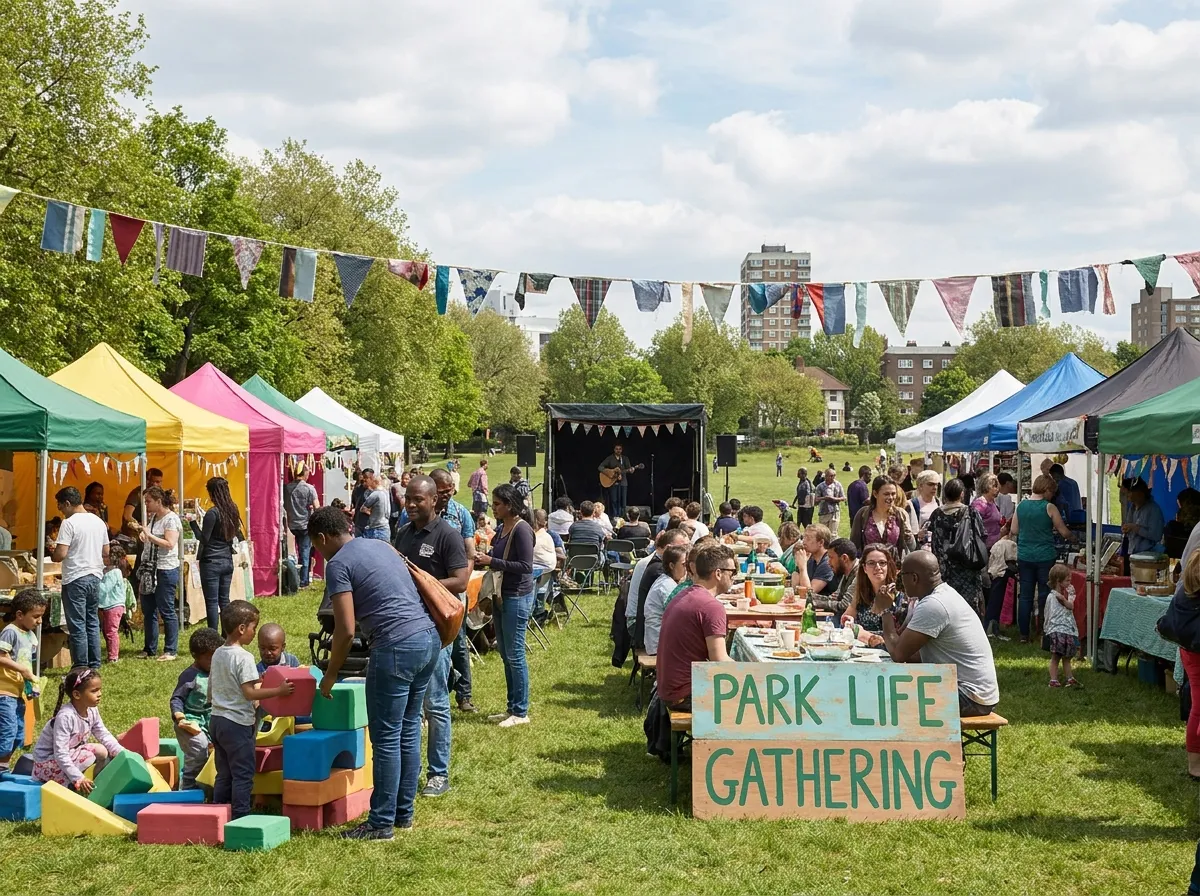

Community Is Becoming the New Marketing Channel
The biggest change in brand marketing isn't how brands communicate—it's how they build communities.They're growing because people are looking for something that traditional marketing struggles to create: a genuine sense of belonging. Eventbrite's Social Study 2026 found that nearly nine in ten young adults want events that help them connect with their local community, reflecting a growing demand for meaningful, shared experiences.
For years, brands measured success by how many people they could reach. Today, many are placing greater value on how deeply they engage the people who already know them. In an increasingly crowded digital landscape, visibility alone is no longer enough. Brands are investing in experiences that encourage participation rather than passive attention.
Community-led events reflect this shift. Rather than acting as one-off marketing campaigns, they create opportunities for people to connect through shared interests, conversations and experiences. The implication is clear: successful events are no longer measured simply by attendance, but by the strength of the communities they help build.
London's Community Event Scene Is Already Thriving
Community-led events are no longer a niche part of London's event scene. Across the city, organisers are building repeatable, interest-led gatherings that bring people together around shared identities, professions and passions rather than broad audiences.
CreativeMornings London is a useful example because it is not designed as a one-off event. As part of a global creative community, its free monthly breakfast talks bring local creatives together through a recurring format built around ideas, conversation and connection. The value is not only in the talk itself, but in the regular rhythm of gathering that helps a creative community continue to form over time.
ProductTank London shows the same pattern in a different sector. Its meetups are built around product professionals exchanging ideas, experiences and knowledge, with networking forming part of the format rather than an add-on. ProductTank describes itself as an informal meetup for local product communities, founded in London in 2010 and now active in more than 200 cities, which shows how a local community-led format can scale without losing its peer-led character.
These examples matter because they show that community-led events are not defined by size alone. They are defined by repetition, shared purpose and the quality of interaction they create. In London, where professional, creative and neighbourhood communities overlap, this model is becoming an increasingly important part of how people meet, learn and build relationships.
What Makes Community-Led Events Different?
One of the biggest shifts in live events is that people no longer measure value simply by attending. Increasingly, they expect to participate.
Traditional events were often built around presentations, where success was measured by audience size and the number of people reached. Community-led events take a different approach. Rather than asking people to sit and listen, they create opportunities to ask questions, exchange ideas, share experiences and contribute to the conversation. Participation becomes part of the experience itself.
This reflects a broader change in how people engage with brands. Audiences are becoming communities, and consumers increasingly value opportunities to interact directly with both brands and like-minded people. Whether through founder Q&As, workshops, networking sessions or creator meetups, the most successful events create a sense of involvement rather than observation.
For organisations, this changes what success looks like. Attendance still matters, but it is no longer the defining metric. The quality of conversations, the willingness of people to participate and the relationships that continue beyond the event often provide a far stronger indication of long-term community growth.
The Best Community Events Don't End When People Go Home
Traditional events are often judged by what happens on the day. Community-led events, however, are defined by what happens afterwards.
The most successful community events don't end when the final session finishes or the venue empties. They continue through follow-up conversations, new introductions, future collaborations and the anticipation of the next gathering. In many cases, the event itself is simply the catalyst that brings people together for relationships that continue long after everyone has gone home.
This also changes how organisations should think about success. Attendance still matters, but it is no longer the only measure of impact. Returning attendees, ongoing engagement and the strength of the relationships formed after the event often provide a much clearer indication of whether a community is genuinely growing.
For organisers, this means planning beyond the event itself. Every decision—from the format of the programme to the environment people share—should encourage interactions that continue after the day is over. The strongest communities are rarely built in a single afternoon; they are built through experiences that give people a reason to come back.
Looking Beyond the Event
Perhaps the biggest shift isn't that community-led events are replacing traditional events. It's that brands are increasingly measuring success through relationships rather than reach.
Community-led events create opportunities for those relationships to develop through shared interests, meaningful conversations and experiences that continue long after the event itself. In that sense, the event is rarely the final outcome—it's the starting point of a community.
As organisations continue to invest in long-term engagement, choosing the right environment becomes more than a logistical decision. It becomes part of the strategy for building communities that people genuinely want to be part of.
Planning a community-led event in London?
👉Explore unique venues on SpaceCloud